Posts

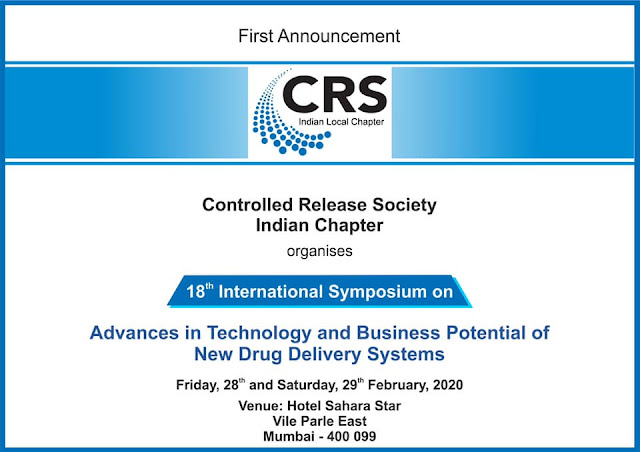
18th International symposium of Controlled Release Society - India Chapter

Image

Top 5 Health System Pharmacy Trends for 2019

The New Year promises to be filled with new opportunities for your health system pharmacy to better serve the clinical needs of your patients and the business needs of your pharmacy and hospital. Here are the top five trends we think will have the biggest impact on your health system pharmacy in 2019. In addition to revealing the top trends for this year, let me explain why they’re important for your health system pharmacy and how best to address them to produce the best possible outcomes for you and your patients. 1. Specialty drug spend is growing The number of specialty drugs entering the market will continue to grow in 2019, along with the price of each new drug. Prescribers and patients will expect a seamless experience that begins with your health system pharmacy. Your system will expect you to procure them and have health plans reimburse you for them. You need key relationships in place with specialty pharmacies as you will not be able to procure and dispense limi...

Dr. Reddy’s Is First Indian Pharma Firm Accepted Under China’s New Drug-Buying Plan

     Dr. Reddy’s Laboratories Ltd. is the first Indian drugmaker to win an approval to supply a key drug to treat schizophrenia and bipolar disorder in China after the world’s second-largest pharma market asked manufacturers to submit bids to supply commonly used generic medications to hospitals across the East Asian nation.      India’s second-largest drugmaker by revenue bagged the rights to supply Olanzapine in China. Its bid was at a 35 percent discount to the drug’s current prevailing price and it will supply the product to public hospitals in several provinces, including Zhejiang, Hunan and Guangxi, brokerages including Nomura Holdings Inc. and Jefferies Group LLC said citing a media report of Chinese news agency Caixin.      China had rolled out a bulk drug procurement programme to drive down prices and provide better access to quality drugs and treatment to its population. The country is importing more drugs and speeding up appr...

Why India's Pharma Industry Needs to Act Now to Win Back the Trust It Lost

    One of us conducted an informal poll on a social media platform about individual preferences for a particular brand of medicine. Around 70% of responders who lived in India trusted brands prescribed by their doctors while 80% of those who lived in a high-income country voted for cheaper brands recommended by their pharmacists.         The survey results reflect a common – and interesting – perception. Why do Indians not trust a generic alternative to their doctors’ recommendations? In her recent book  Bottle of Lies , the investigative journalist Katherine Eban writes about the startling discovery by an FDA investigator of substandard insulin manufactured by the Indian company Ranbaxy. Dinesh Thakur, a whistleblower at Ranbaxy, exposed the company’s efforts to forge data and dispose evidence to avoid penalties.       Eban describes the utter disregard the company had for the people that consumed these harmful medicines. ...

IPC to host workshop on 'Establishment of PV System in Pharma Industries' on Oct 12 in Mumbai

In order to sensitize stakeholders about the need for a properly-designed Pharmacovigilance (PV) system to monitor Adverse Drug Reactions (ADRs), the Indian Pharmacopoeia Commission (IPC) will organise a workshop on " Basics of Pharmacovigilance & Establishment of Pharmacovigilance System in Pharmaceutical Industries - A Way Forward " on October 12 at SciTech Centre in Mumbai. It is aimed at establishing safer drug use in the country  This 4th regional workshop is aimed at bringing together regulatory authorities and pharma professionals/experts to discuss the practice of pharmacovigilance in the country. It will also widen the knowledge spectrum of pharma professionals in the field of pharmacovigilance. Professionals in pharmacovigilance, quality assurance (QA) and regulatory affairs (RA) in pharmaceutical companies and healthcare systems are the targeted audience of this workshop. And creation of an agreeable road map for pharmaceutical companies ...

Healthcare industry welcomes govt's decision to slash corporate tax rate

Healthcare industry on 20th September 2019 welcomed the government's decision to slash corporate tax, and said rationalisation of tax structure will provide much-awaited booster dose to the sector. In a major fiscal booster, the government on Friday slashed effective corporate tax to 25.17 per cent inclusive of all cess and surcharges for domestic companies. " Reduction in corporate tax and other relief would create a favourable business climate for the companies which were under tremendous pressure due to several internal and external market forces ," Nathealth President H Sudarshan Ballal said. The apex healthcare industry body believes that the corporate tax reduction move would be supplemented by the Goods and Services Tax (GST) reforms as well. Apollo Hospitals Chairman Prathap C Reddy said: " We heartily welcome the measures announced by the hon'ble Finance Minister today. Corporate India has for long been advocating standardised rates o...

No new pharmacy colleges till 2022 to avoid fate similar to Engineering

       The blanket ban by AICTE and Pharmacy Council Of India is not applicable to North East and states with less than 50 Pharmacy Institute. The to impose a moratorium was triggered primarily due to the unprecedented applications received by the councils for starting new pharmacy programmes during the academic session 2019-20. Several technical institutes and nursing colleges saw a dip in the admissions. the buildings of these institutes  were used to start pharmacy colleges.        Presently, more than 3000 Pharmacy colleges have enrolled more than 1 lakh students in undergraduate courses, which is adequate to meet the country's need to cater to the global health workforce, as per Dr. Suresh Bhojraj , President of  PCI .. As many as 1400 application were received in 2019-2020 to start new pharmacy colleges of which 842 were granted approvals, with maximum of 541 institutions in Uttar Pradesh . The conditional ban would avoid...